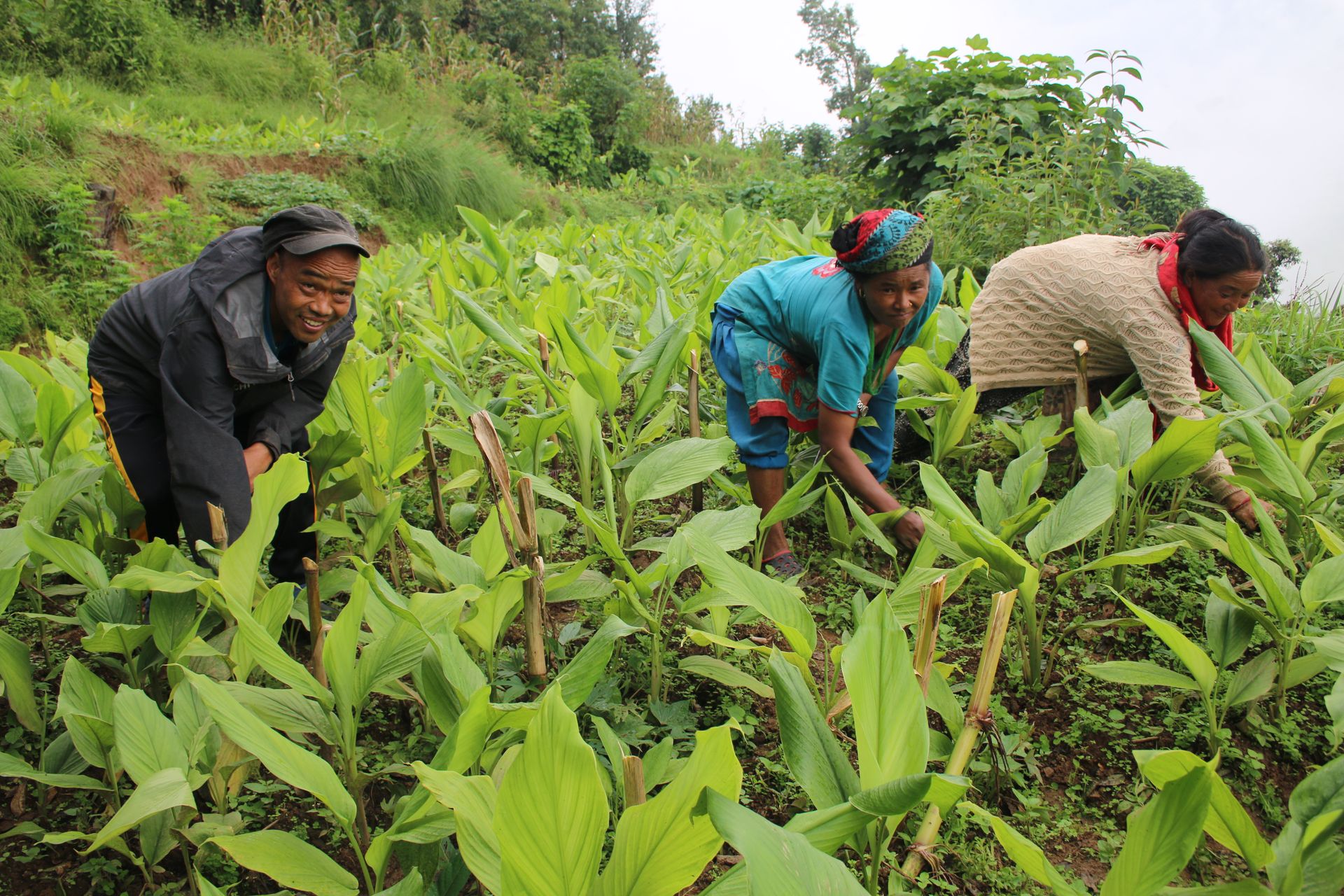
This program ‘Public-Private-Community-Alliance for Sustainable Natural Products-based Enterprises and Local Economic Development (PPCA), Phase II’ is the continuation of the previously implemented ‘Public-Private-Community-Alliance for Sustainable Natural Products-based Enterprises and Local Economic Development (PPCA), Phase I (2018-2021)’ program. The previously implemented program showcased the unique locally-led inclusive governance and coordination mechanism at the municipality level, and focused on diversifying revenue streams for local communities through enterprise-oriented farm and forest management, coupled with value chain development.
The innovative nature of PPCA alliance, along with interventions aimed at diversifying revenues at the community level through sustainable management and utilization of natural resources, received strong recognition from various local stakeholders. These include Jiri municipality, farmers and forest user groups, cooperatives, and local enterprises. Furthermore, other municipalities also expressed keen interest in implementing the PPCA model in their respective jurisdictions. At the national and international level, development partners and industry associations also acknowledged the PPCA as an innovation for locally-led development with inclusive governance and as an initiative that address environmental degradation with some emphasis on research-to-action.
In this backdrop, ANSAB collaborating closely with the Aveda team, engaged to follow up on understanding the dynamics of and advancing the PPCA program. The lessons from the past and the best practices that have been developed over the years were carefully considered, and PPCA Phase II is being implemented since March 2024.
OBJECTIVE OF THE PROJECT
Building on the previous work and in alignment with current needs and expectations of indigenous people and local communities (IPLC), municipality and other key stakeholders, this project aims to contribute to locally led biodiversity conservation, enterprise development and climate change adaptation while generating sustainable income and employment opportunities for hundreds of small-holder farmers and wild-plant harvesters. For this, the project will support them in their endeavors to inclusive governance, sustainable management of forest and farm resources, value addition and marketing of farm and forest products, resilient livelihoods, and promoting social justice and harmony.
More specifically, the project will strive to achieve the following outcomes:
EXPECTED RESULTS
With the implementation of this project, the following results are expected: