Volume 4, Issue 2: August-September-October-November 2013
Design and setting up of a governance and payment system for Nepal’s Community Forest Management under Reduced Emission from Deforestation and Degradation (REDD): Some Findings

ANSAB, International Centre for Integrated Mountain Development (ICIMOD), and Federation of Community Forest Users, Nepal (FECOFUN) implemented a project “Design and setting up of a governance and payment system for Nepal’s Community Forest Management under Reducing Emission from Deforestation and Degradation (REDD+)” in three watershed regions – Kayerkhola of Chitwan, Ludikhola of Gorakha and Charnawati of Dolakha districts of Nepal from June 2009 to May 2013 with the financial support from the Climate and Forest Initiative of the Government of Norway. The main goal of this pilot project was to set up a demonstrational governance and payment system for emission reduction through sustainable forest management intended to benefit local communities in general and indigenous people in particular.
Table: Background on the outreach of the project
Watershed
Forest area under REDD project (ha)
Number of community forest
Total no of household
Total population
Total population of women
Kayarkhola
2,381.96
16
4,415
26,024
13,159
Charnawati
6,094.31
65
8,772
47,290
23,647
Ludikhola
1,888.00
31
4,348
24,882
12,379
Total
10,364.27
112
17,535
98,196
49,185
During its implementation, the project strengthened the capacity of civil society actors in Nepal namely Himawanti Nepal, Nepal Federation of Indigenous Nationalities (NEFIN), Dalit NGO Federation (DNF) and REDD Alliance to ensure active engagement in the REDD+ development process and gaining necessary implementation level experiences. The project also disseminated 190 biogas and 967 improved cooking stoves as the alternative energy systems for the reduction of the community’s dependency on forest resources for fuel. Carbon measurement guideline for the community forests was also developed and the local communities were trained for measuring and monitoring carbon in their forest and integrating carbon assessment as an activity in their operational plan of the community forest. A pilot Forest Carbon Trust Fund was developed to disseminate the REDD+ seed grants to the community forest user groups, where the locals also managed FCTF at community level. The main focus of this pilot project was to stimulate performance based forest management through the financial incentive provided in the form of REDD+ payment. REDD+ seed grants of US $95,000 were provided to the community forest user groups in the three watersheds were provided from 2011 for three years in accordance to the Forest Carbon Trust Fund Operational Guideline. Following criteria were set in the Guideline for the REDD+ seed grants payment: 24% for carbon stock, 16% for carbon increment, 10% for the number of household of indigenous people, 15% for Dalit households, 15% for the women population in forest user groups, and 20% for the population of poor households. This elaborate set of criteria where 40% was given to carbon and 60% on social safeguards was for the purpose of maintaining equity.
Table: Total carbon stock and the corresponding payment by the project
Watershed
2010
2011
2012
2013
Base-line carbon stock (‘000 t C)
Total carbon stock (‘000 t C)
Paym-ent in USD
Total carbon stock
(‘000 t C)
Paym-ent in USD
Total carbon stock
(‘000 t C)
Paym-ent in USD
Kayarkhola
686.7
690.0
21,905
695.7
24,691
702.7
25,659
Charnawati
1,240.5
1,254.5
45,535
1,271.0
44,188
1,288.3
43,156
Ludikhola
394.3
404.3
27,560
409.9
26,121
417.7
26,185
The lessons learnt from this pilot project have been used to develop knowledge package on REDD+ and extensively recognized as inputs for the formulation of National REDD Strategy. As there are very few actual on the ground REDD+ payments made, this project offered forestry professionals from different countries to visit the site and learn on how participatory community REDD can be implemented. It also provided a real opportunity for student and researchers to analyze the impacts of REDD+ which otherwise would not be possible had the payments not been made.
At the end of the 4 year of this project, the results indicate that:
Find more on project website >>>
PUBLICATIONS
Annual Report 2012
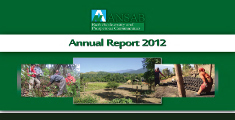
ANSAB has released its electronic version of 2012 Annual Report in its website. In addition to the traditional facts & figure about the organization’s operations, the report contains project per project updates, highlights of the year, as well as reflexive piece by the Executive Director. An update of our Impact Tracking System also reveals that ANSAB’s interventions to date generated sales of US $7.91 million in annual monetary benefits for 84,120 economic participants while bringing 101,055 hectare of forest and meadow areas under the improved community management of 407 Community Forest User Groups (CFUGs), representing more than 61 thousand households (HHs).
Download the report >>> (PDF, 3.6MB)
Field Manuals on Nursery Management and Cultivation of Paris polyphylla and Swertia chirayita
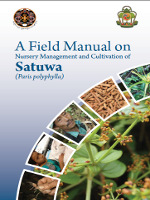
Two manuals on nursery development and cultivation each of Paris polyphylla (Satuwa) and Swertia chirayita (Chiraita) has been prepared by ANSAB for SNV Bhutan for their technical assistance to ‘Market Access and Growth Intensification Project (MAGIP)’ funded by the International Fund for Agricultural Development (IFAD) and implemented by Ministry of Agriculture and Forests (MoAF), Royal Government of Bhutan. These field manuals provide guidance and instructions for the nursery development, cultivation and domestication of the two species.
Download the Manual for Paris polyphylla (PDF, 463KB)
Download the Manual for Swertia chirayita (PDF, 922KB)
IN BRIEF
World Bank awards ANSAB as the regional intermediary organization in Asia and the Pacific region
World Bank has selected ANSAB as the regional intermediary organization for the FCPF (Forest Carbon Partnership Facility) capacity building programs for the fiscal year 2014-15 in Asia and the Pacific region. ANSAB will work with FCPF for fund mobilization supporting REDD+ activities for the civil society organizations and local communities in FCPF REDD countries of Asia and the Pacific.
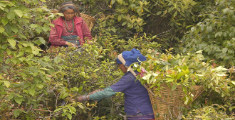
Four new projects approved to ANSAB and its consortium
1. Supporting communities to conserve forest biodiversity and environment-a pilot initiative in Shivamandir VDC, Nawalparasi, Nepal
Funded by Manfred Hermsen Stiftung (MHS) Germany, this project will be implemented in Nawalparasi district, Nepal and will build a case for community-based forest conservation in Nepal’s highly threatened landscape. The project will be implemented from July 2013 to December 2015.
2. Up-scaling the production and consumption of bio-energy to reduce carbon emissions and enhance local employment in Nepal
European Commission/Switch Asia call awarded the project to the consortium of Helvetas Nepal, ANSAB, IUCN Nepal and Minergy to up-scale the production and industrial consumption of bio-energy in Nepal for increasing employment and reducing carbon emissions in the country. ANSAB will provide services as enterprises and entrepreneurship development, product quality improvement, packaging and product promotion, linkages with marketing companies, and strengthening associations and entire value chain.
3. Fighting zoonoses in Afghanistan, Bangladesh and Nepal (ABN)- increasing awareness, prevention, & control of zoonoses
Funded by EC One health programme in Asia and led by Relief International UK this project is being implemented in Afghanistan, Bangladesh and Nepal, this project will contribute to the reduction of zoonoses and alleviate their impact on fragile population by promoting awareness, behaviour change, and coordination between individuals and local and national authorities. ANSAB will be the country focal point of Nepal.
4. Energy gardens for small-scale farmers in Nepal: institutions, species and technology
Funded by ESRC-DFID Development Frontiers Research Fund and led by University of York-UK in partnership with ANSAB, Practical Action Nepal, Ethnobotanical Society of Nepal (ESON), Botanic Gardens Conservation International (BGCI), Hassan Biofuels Park and Feminist Dalit Organization, this project will investigate the socio-economics of biomass energy production at the level of households, small-scale farms and the communities where they are situated. ANSAB will be responsible for inputs on household and community-based agriculture and bioresource production systems in Nepal. The project will commence from October 2013 for 18 months.
Consult the Nepal Garden Project to read more>>>
Read more on ANSAB’s current projects >>>
EVENTS
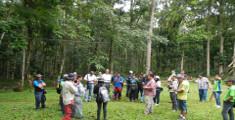
Capacity strengthening for sustainable environmental financing exchange training Nepal – The Philippines
Relief International – Enterprise Works / VITA (RI-EWV) conducted an exchange training on sustainable environmental financing to the Filipino foresters to ANSAB. Under the program a Filipino team representing RI-EW, Department of Environment and Natural Resources (DENR) and IPAS visited Nepal form April 22-28 and were offered training on forest carbon measurement, data entry and analysis of forest biomass and carbon by ANSAB’s technical staff. During the trip in Nepal, the participants were exposed to the range of environmental financing options being implemented in Nepal; offered direct visits and facilitated discussions with communities on operation of benefit sharing programs using environmental payments; and provided a practical training module in participatory monitoring and evaluation necessary for forest rehabilitation, conservation. The technical staffs from ANSAB visited Mindanao and Palawan regions from May 27 to June 2, 2013 and offered same trainings in Philippines. The training also used the “Guideline for Measuring Carbon Stocks in Community- Managed Forests” developed by ANSAB as a key reference material.
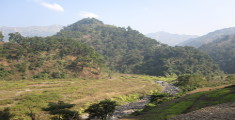
Free and prior informed consent (FPIC) training
ANSAB together with Forest Stewardship Council (FSC) organized a four days training on Free and prior informed consent (FPIC) in Nepal from 23 to 26 July, 2013. The training focused on key concepts related to FPIC, Access and benefit sharing (ABS) and biodiversity conservation, and their application for ES certification within the FSC framework. Altogether ten representatives of the global ForCES project participated the training. The participants also visited the project site of Nepal and interacted with the community forest user group committee.
MARKET PRICES
Nepal
India
Aconite
650
-
970
Chiretta
625
-
800
Cinnamon
57.5
-
76.5
Dried ginger
190
222
Indian mastiche
600
1360
-
Gentian
810
1210
Madder
95
-
128
Prickly ash
185
-
248
Rock foil
42
64
-
Soap nut
21
37.25
Spikenard
347.5
704
Sweetflag
85
171.5
Indian valerian
240
590
July 2013 prices in NRs./Kg. Average of two markets (Kathmandu and Nepalgunj) for Nepal; and four (Delhi, Tanakpur, Lucknow and Kolkata) for India. Variations calculated from the previous month.
Consult the complete price list (33 products) >>>